Uses and Gratification Theory
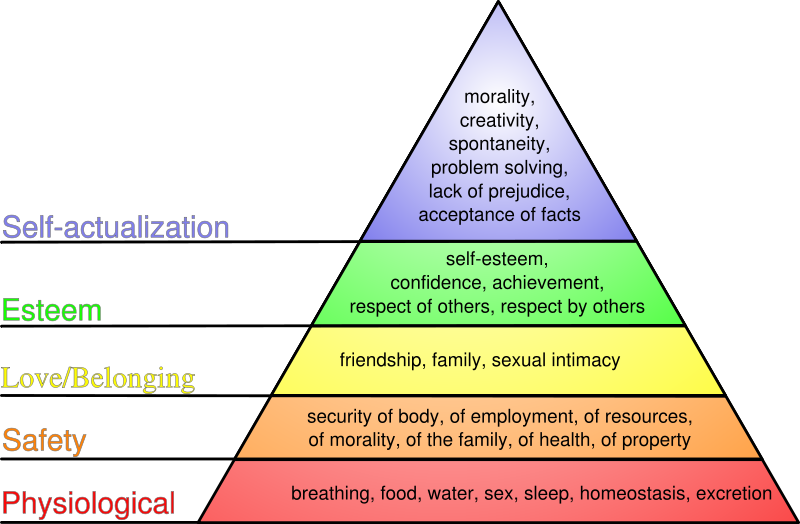
This theory suggests that we used media texts to fulfil our needs, these needs of which are based upon 'Maslow's hierarchy of needs'. This hierarchy is split into five different sections; the most important shown at the bottom being physiological needs, safety, love/belonging, esteem and at the top being the least important is self-actualization. These five are then split up into smaller needs which are met by many different aspects; some of those are then met by several media aspects.
Reception Analysis
Stuart Hall (1980)
Suggests that if you make a media piece then some meaning goes into it, when producers do this they have no control over this and how the audience are going to take this meaning of which the media piece is trying to give out. There are three different types of meaning which the audience take on;
- Preferred Meaning- This is when the decoder is able to get the meaning of which the coder is trying to give out in the media.
Oppositional Reading- This is when the meaning the decoder gets from a media is opposite to the meaning that is given out by the coder.- Negotiated Meaning- When the decoder gets the meaning given out by the coder but also creates their own meaning.
Open and Closed Meaning
Umberto Eco (1981)
His theory implies that the meaning given off my different types of media is split into two categories both open and closed.
- Open- A media text with many meanings, this is deliberately ambiguous. This can be understood in different ways by a number of different audiences.
Closed- Media texts aimed at a mass audience which will be encoded in a way that most people only be able to decode the preferred meaning, the meaning that the coder wants the audience to get.

No comments:
Post a Comment